The Tarnish Myth: Why Silver Does Not Need Constant Polishing
Learn why silver tarnish is not a cue for constant polishing, and how gentle, occasional care helps preserve a piece’s finish and surface details.
Does silver jewellery need polishing every time it loses its shine? Usually, no. Silver tarnish is a surface change, not a signal that a piece is dirty or failing, and frequent polishing can remove more than the dark film you meant to clear. A gentler approach helps keep both the metal and its intended finish looking as they should.
What tarnish means
Tarnish is a thin discoloration that forms when silver reacts with substances in its surroundings. Airborne compounds, moisture, cosmetics, and residues from handling can all contribute. The color may range from a faint yellowish cast to deeper gray or black, depending on the conditions and the piece.
That change is different from ordinary dust or a greasy fingerprint. Loose dust may brush away, while skin oils and product residue can make a surface look dull. Tarnish is a change at the surface of the metal itself. It can be unattractive to you, but its presence alone does not mean the jewellery needs urgent treatment.
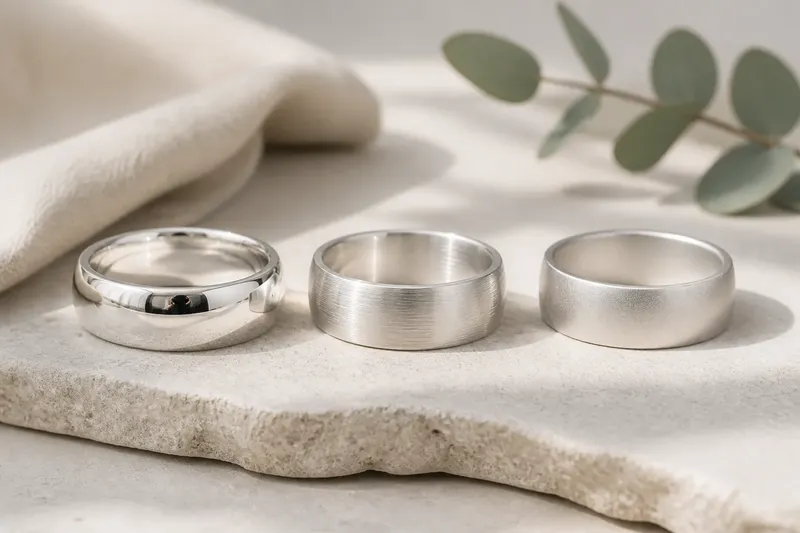
Silver also does not have to look mirror-bright to be clean or well kept. A satin, brushed, or deliberately darkened finish may be part of the design. Before reaching for a polishing cloth, consider whether the piece’s current appearance is tarnish, dirt, or an intentional surface treatment.
Polishing removes metal
Many polishing cloths and pastes contain mild abrasives. As you rub, they help lift tarnish, but they also make contact with the silver beneath it. The amount removed in one careful session may be slight, yet repeated polishing can gradually soften fine details or alter the surface.
Think of polishing like using an eraser on a pencil mark: the mark goes, but the paper is also rubbed. On silver, that trade-off matters around engraved lines, raised patterns, thin edges, and small decorative elements. Broad, repeated rubbing can make crisp details look less distinct over time.
Different finishes respond differently. A high polish may tolerate a gentle wipe, while a brushed finish can lose some of its directional texture if rubbed across the grain. A darkened recess may be an intentional contrast; polishing it aggressively can brighten the low areas and change the design. If a piece is plated, worn, or especially delicate, abrasive treatment may affect its surface layer or reveal underlying metal.
Polishing can also leave residue in small spaces, such as beneath a setting or between links. A soft cloth is useful for light surface care, but it is not a reason to scrub every crevice. For a piece with stones, glued elements, delicate construction, or an uncertain finish, check the maker’s care instructions or ask a qualified jeweller before choosing a cleaning method.
Choose care by appearance
Let the actual condition of the jewellery guide your response. A slight change in color may need no action. Fingerprints or a film from lotion may call for a gentle wipe. Dark tarnish that bothers you may justify careful polishing, provided the piece can safely be polished and the finish is meant to be bright.
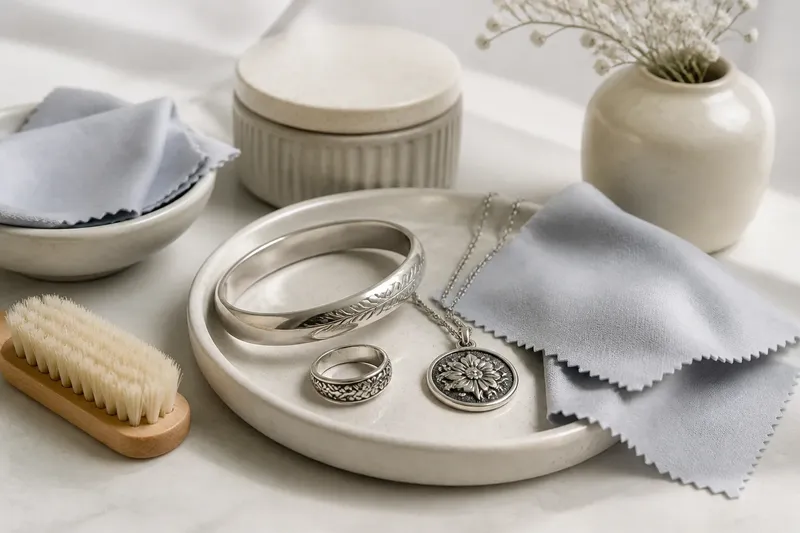
Start with the least abrasive option that makes sense. A clean, soft cloth can remove surface oils after wear. If the piece remains dull and you want it brighter, use a silver polishing cloth with light pressure and short, controlled passes. Avoid treating every area as if it needs the same attention; stop when the appearance is satisfactory rather than pursuing a perfectly uniform shine.
For jewellery that is intentionally oxidized or textured, preserve the contrast instead of chasing brightness. A cloth used on raised areas can still catch recessed details, so keep contact limited and gentle. If tarnish is concentrated around a setting or in a complex pattern, a jeweller can advise whether home polishing is appropriate.
Say you have a silver pendant with a bright center and darkened grooves. If you notice a light film on the raised surface, you might wipe that area gently with a clean cloth and leave the grooves alone. The expected visible result is a cleaner-looking raised surface while the darker design remains intact; if the pendant still seems dull, pause rather than rubbing harder.
Questions about silver tarnish?
Should I polish silver after every wear?
No. If the piece looks clean, there is no need to polish it simply because you wore it. A soft, dry cloth can remove skin oils without making a polishing session part of every routine.
Does tarnish damage silver jewellery?
Ordinary tarnish is a surface discoloration and does not automatically mean a piece is damaged. More important concerns include loose settings, cracks, worn plating, or a finish that changes unexpectedly; those are reasons to seek a jeweller’s advice rather than scrub the piece.
Can I use toothpaste on silver?
It is better to avoid toothpaste because its abrasiveness and additives vary, and it may scratch or dull a delicate finish. Use a product intended for silver only when the item’s construction and finish are suitable for it.
What if I like the patina?
You can leave an even, attractive darkening in place if it suits the piece. Patina is often part of the visual character of silver, especially where darker areas emphasize engraved or raised details.
Make polishing occasional
There is no universal schedule for polishing. A piece worn often may collect oils more quickly, while jewellery kept in a dry, closed container may change more slowly. Let appearance, intended finish, and construction determine whether any action is needed.
After wearing silver, a light wipe with a soft cloth can remove residue before storage. Keep pieces separate so they do not rub against one another, and choose a dry place away from bathroom moisture and household chemicals. These habits may reduce the need for polishing, though they cannot prevent every change in surface color.
When you do polish, use a product made for silver and follow its directions. Avoid rough paper towels, scouring pads, and vigorous back-and-forth rubbing. If a piece has pearls, soft gemstones, glued components, plating, or an unfamiliar darkened treatment, confirm a suitable method with the maker or a qualified jeweller; care needs can differ by material and construction.
Silver care is not a contest to keep every surface bright. The useful question is whether the piece looks the way you want it to look, and whether the next cleaning choice protects the details that make it yours. A restrained wipe or no action at all can be the better form of care.
For silver jewellery, occasional polishing is usually enough when tarnish genuinely bothers you. Leaving an attractive patina alone and avoiding unnecessary abrasion helps preserve the finish, texture, and small details that polishing cannot put back.