Why Silver Spoons Became Keepsakes
Why silver spoons became keepsakes: see how engraving and gifting turned table tools into personal records, and choose a meaningful spoon to preserve.
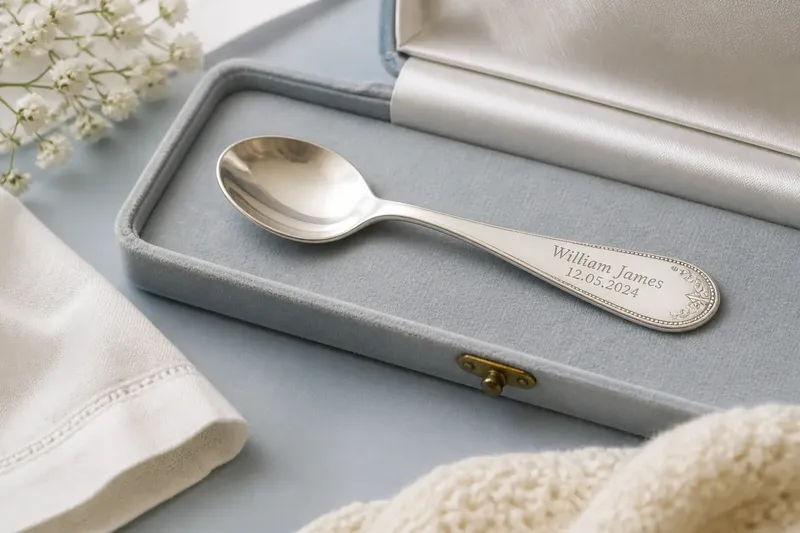
Why did a silver spoon become a keepsake rather than just another utensil? Its usefulness gave it a place in daily life, while an engraved name, date, or dedication could make that familiar object stand for a person or occasion. The shift was not a single tradition with one meaning; it grew through different kinds of gifts and family habits.
From table tool to token
A spoon is a practical object that passes through ordinary routines. It can be used at a meal, put away, and brought out again. That repeated contact makes it an especially legible gift: unlike a decoration that stays on a shelf, a spoon belongs to an activity people recognize.
Silver also carried associations of care, formality, and lasting value. A silver spoon could mark a child’s arrival, a birthday, a family milestone, or a visit. The object’s meaning came partly from its material, but also from the giver’s choice to make a useful thing personal.
Engraving helped that personal meaning endure. A name or date could identify the recipient or occasion long after the original gathering was over. The letters worked like a small inscription on a book’s inside cover: they connected an object to its owner without changing what the object was for.
Three gifting approaches
Silver spoon keepsakes generally make sense through three approaches: a named personal gift, a ceremonial presentation, or an inherited family object. They can overlap, but each puts emphasis somewhere different.
A named gift
A spoon engraved with a recipient’s name, initials, or birth date makes the individual central. It suits a close family member or friend when the giver wants to mark a personal connection, especially if the spoon is likely to be kept with other treasured objects.
The inscription can be spare. Initials may feel private and unobtrusive; a full name and date make the identity and occasion easier for later generations to read. The decision is less about how much text fits than about what the recipient may want to see each time the spoon is handled.
A ceremonial gift
A spoon given for a baptism, christening, wedding, or other formal milestone emphasizes the occasion. A short dedication or date can anchor the object to that event. This approach suits a giver who wants to honor a shared ritual, even if the spoon is not used often.
Here, the inscription can name the occasion rather than only the recipient. That distinction matters when the event is part of a family’s tradition. It also makes the spoon easier to understand if it is later passed to someone who was not present.
An inherited spoon
An older spoon may become a keepsake because it has already moved through a family, not because it began as a commemorative gift. Its engraving might record an earlier owner, a maker, or a presentation. This suits someone who values continuity and wants to preserve the object’s existing story rather than add a new one.
In this case, restraint is usually the more meaningful choice. A new inscription can compete with old marks or alter the object’s character. The spoon may be best kept with a note explaining who passed it on and what is known, while uncertainty is clearly left as uncertainty.
Choosing an inscription
Before commissioning engraving, decide what the words should do. Should they identify the recipient, preserve a date, or recall a particular relationship? One clear purpose often makes a more readable inscription than several lines trying to capture every detail.
- Name or initials: Choose these when personal ownership is the main point.
- Date: Add one when the occasion matters and the date is certain.
- Short dedication: Use a few words when the relationship matters more than the event.
- Family or place name: Consider this when the spoon is meant to remain connected to a household or community.
Say you are choosing a spoon for a new baby and want it to be understood years later. You decide the child’s full name and birth date matter more than a long message, then ask an engraver whether the spoon’s shape leaves a clear area for both. The expected result is an inscription that identifies the recipient and occasion without crowding the design.
What does the spoon say?
Should a keepsake spoon be used?
That depends on the recipient and the spoon’s condition. Some families use a sound spoon at special meals, while others preserve it as a memento; either choice can honor the gift’s meaning.
What should an engraving include?
Choose details that will still make sense without the giver present to explain them. A name, date, or concise dedication is often clearer than a private phrase whose context may disappear.
How can an old inscription be understood?
Read what is visible, note where the spoon came from, and distinguish family memory from confirmed details. A short written record kept with the spoon can preserve that distinction for the next person.
Is a spoon a suitable gift today?
It can be, if the recipient values objects with personal or family meaning. Consider whether the spoon feels relevant to that person rather than assuming that a traditional gift will suit everyone.
How to choose
Start with the recipient’s relationship to the occasion. A named gift is strongest when the goal is individual recognition; a ceremonial spoon fits a shared milestone; an inherited spoon calls for attention to the story already attached to it.
Then consider how the object may be kept. If the recipient enjoys using silver, a functional spoon may be welcome. If the gift is primarily commemorative, a presentation box and a brief note can explain why it was chosen. Neither use nor display is the only proper response.
Finally, match the engraving to the spoon’s form and existing marks. The maker’s instructions and the engraver’s advice matter for the particular piece, especially if it is old or already inscribed. Keep any family account with the object, but label what is remembered separately from what the engraving itself confirms.
Silver spoon keepsakes endure because they let a small object hold several kinds of meaning at once: use, affection, ceremony, and family memory. When choosing one, the most useful question is not whether it looks traditionally appropriate, but what you want its next owner to understand when they turn it over and read the inscription.